
Why the Handover Goes Wrong
Hand over books to an accountant the way you would hand over keys: one packet, one call, one checklist. Gather the records, clean the obvious mess, list the open questions, and walk through the year once. Five steps, two hours of prep — and an accountant who bills you for accounting, not for archaeology.
Most handovers fail the same way: a folder dump with no map. The accountant spends billable hours reconstructing what a ten-minute note would have explained, the bill stings, and next year you swear you will “get organized.” Owners who hand over books to an accountant every year without a packet pay that reconstruction fee annually. The packet is the fix — and unlike “getting organized,” it takes one afternoon.
The 5 Steps
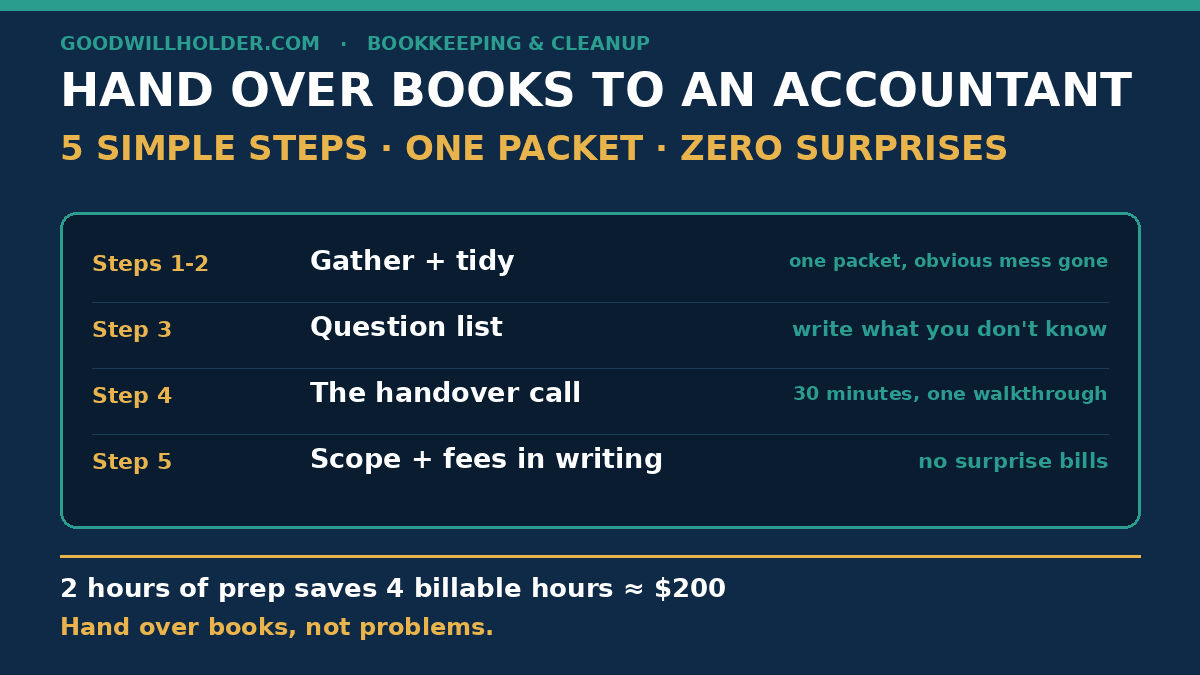
These five steps make it painless to hand over books to an accountant — in order, starting two weeks before your deadline:
- Gather the packet. Bank and card statements, prior year tax return, current P&L and balance sheet, loan documents, payroll reports if any. One folder, named by year.
- Tidy the obvious mess. Empty the uncategorized account, remove duplicates, confirm cash ties. If this step turns into a swamp, stop and call a cleanup first — our bookkeeping cleanup service exists for exactly this hand.
- Write the question list. “Is this laptop a purchase or expense?” “What did we agree on the truck?” “Is this deposit from March or April?” Ten questions on paper save five emails in February.
- Book the handover call. Thirty minutes, one walkthrough: where files live, what the software login is, what the weird accounts mean. Do not skip it to save the fee — it is the cheapest hour of the whole engagement.
- Agree scope and fees in writing. What is included (filing? bookkeeping? payroll?), what is extra, when it is due. Our month-end close checklist keeps the handover clean every month after.
What the Packet Contains
The packet is the product. When you hand over books to an accountant, what you give them is what they bill against. Minimum contents:
- 12 months of bank and credit card statements (PDFs, not screenshots).
- Bookkeeping software access or a clean export (with the login documented).
- Prior filed tax return + any notices.
- Loan, lease, and payroll summaries.
- The question list from step 3.
- One paragraph: “this year was different because…” (new product, moved states, got a loan — the story explains the numbers).
A tidy packet cuts the back-and-forth that turns a $200 job into a $600 one. Two hours of prep saves four billable hours at $50 — that is $200 kept in your pocket before anyone files anything.
When to Hand Over (and When Not To)
Timing matters as much as the packet. Owners who hand over books to an accountant early in the tax season queue get better prices and better attention — February beats April, when every accountant in town is already underwater. Hand over immediately when you sell the business, bring in a partner, or apply for a loan; those events demand clean, defensible numbers. And do not hand over mid-mess on purpose: if you know the bank has not been reconciled in six months, buying cleanup first is cheaper than paying accountant rates to untangle it. The accountant should review and interpret, not reconstruct your cash history from screenshots.
Quick Checklist
Use this before you hand over books to an accountant:
- ☐ Statements complete: 12 months, all accounts, PDF format.
- ☐ Cash accounts tie to the bank (or the gap is written down).
- ☐ Uncategorized and duplicate items cleared.
- ☐ Question list written — ten items, plain language.
- ☐ Handover call booked; login details shared securely.
- ☐ Scope and fee agreement in writing.
In short: hand over books to an accountant with a packet and a call, not a folder and a prayer. Do it like a professional and you buy something rare: an April with no surprises. The packet takes an afternoon; the call takes half an hour; the clarity lasts a tax year. If the pile looks too messy for an afternoon, fix that first — and start the next year with a monthly rhythm so this handover is your last big one.
Two references worth reading before the call: the IRS recordkeeping guidance and this guide to rebuilding messy books.